Margarethy: A Wedding Circle Monogram Font for Handmade Creators
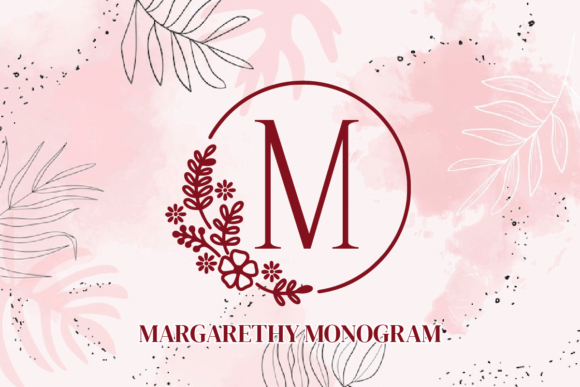
As a maker who designs printable invitations, boutique labels, and wedding signage for small businesses and brides-to-be, I’m always searching for decorative fonts that balance elegance with practicality. Margarethy isn’t just another script—it’s a wedding circle monogram font with a soft, botanical soul, inspired by the delicate curves and layered textures of brides’ bouquets. That floral sensibility translates beautifully into physical products: think hand-stamped tags, laser-cut wood signs, or foil-pressed stationery where every curve feels intentional and tender.
Margarethy shines brightest as a display font—ideal for short, high-impact phrases. Its circular monogram structure makes it perfect for names (like “E + J” inside an elegant loop), boutique initials on cotton tote bags, or monogrammed candle labels for wedding favors. Because each letter flows seamlessly into the next, it reads clearly even at medium sizes—say, 36–48 pt on a 5×7 invitation or a 4×6 acrylic welcome sign. For Cricut and Silhouette users, I’ve found Margarethy cuts cleanly at 24 pt and above on vinyl and cardstock, especially when using the OTF version with its built-in OpenType features like swashes and alternate glyphs. Just avoid scaling it below 18 pt for physical labels—you’ll lose definition in the delicate stems and loops.
I use Margarethy across my digital and physical product lines: as the hero typeface on printable wall art (“She Believed She Could So She Did”), as the focal point on SVG-based farmhouse signs (“Gather Here”), and as a signature accent on planner cover pages and bridal shower printables. It’s especially effective on kraft paper labels and matte-finish stickers—its organic rhythm softens sharp edges and adds warmth to minimalist packaging. One customer told me her lavender-scented soy candles sold faster after switching from a generic script to Margarethy on the front label. That’s not magic—it’s perceived quality, emotional resonance, and brand consistency working together.
Because Margarethy is inherently decorative, it’s not meant for body text or long paragraphs. But that’s exactly why it works so well in craft-based contexts: handmade sellers need fonts that elevate *moments*, not manuscripts. Use it for titles, names, quotes, product names (“Honey & Thyme,” “The Wild Rose Co.”), and seasonal headers—especially for spring weddings, botanical baby showers, or garden party branding. It pairs beautifully with clean sans serif fonts like Montserrat or Lato for contrast: Margarethy handles the charm, while your supporting font handles clarity and hierarchy. For a more vintage feel, try pairing it with a gentle serif like Playfair Display—but keep the serif light and spaced generously so Margarethy remains the star.
What sets Margarethy apart from other decorative fonts is its thoughtful construction. The subtle bounce in the ascenders, the gentle taper on terminals, and the balanced spacing between letters make it feel hand-drawn without sacrificing precision. That matters when you’re cutting intricate designs on thin vellum or printing fine details on tea-stained cardstock. And because it includes stylistic alternates and ligatures, you can customize looks across product lines—swap out a standard “A” for one with a trailing vine flourish on wedding invites, then use the simpler version on product tags for consistency and legibility.
In my shop, Margarethy appears on everything from digital download templates (wedding seating charts, bridal shower games) to physical goods (wooden cake toppers, engraved coasters, fabric banner flags). I’ve tested it across file formats: the OTF works flawlessly in Adobe Illustrator and Cricut Design Space; the TTF renders crisply in Canva for social media graphics and Etsy listing mockups; and the webfont version (if included) helps maintain brand voice across my shop homepage and email newsletters. If multilingual support matters for your audience—say, offering bilingual wedding invites—I recommend checking whether Margarethy includes extended Latin characters before committing to large-scale production.
One thing I never skip: verifying commercial licensing. Margarethy is licensed for commercial use, which means you can confidently use it in client work, sell physical products with its text (like mugs, shirts, or framed prints), bundle it into editable Canva templates, or include it in SVG files for crafters to cut and sell. Just be sure your license covers your intended use—some versions allow unlimited physical sales but restrict resale of the font file itself. When in doubt, read the EULA directly. As a small shop owner, I treat font licensing like ingredient sourcing: transparent, ethical, and non-negotiable.
Realistically, Margarethy won’t replace your workhorse sans serif or your go-to serif for body copy. But it *will* become the font you reach for when you want your product to whisper “thoughtful,” “intentional,” and “loved.” Whether you’re printing 200 wedding programs or designing a single custom gift tag, Margarethy brings that quiet, botanical elegance that makes customers pause—and remember your brand.
If you design for emotion first and function second—if your ideal customer chooses handmade over mass-produced because of how something *feels*—then Margarethy isn’t just another decorative font. It’s a tool that helps your craft carry meaning, your packaging tell a story, and your digital downloads stand out in a crowded marketplace. And in this industry, where attention is scarce and authenticity is currency, that kind of quiet power is worth every pixel.